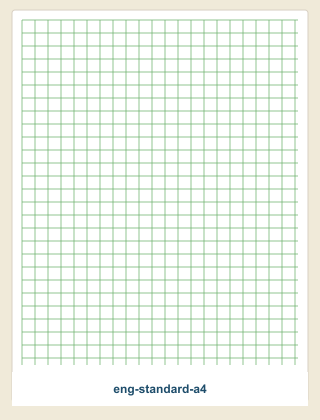
Standard Engineering A4
Classic green engineering paper with 2mm minor grid and heavy 10mm major grid on A4. The standard for engineering calculations worldwide.
Engineering graph paper layers a fine minor grid under heavier major lines — the two-weight hierarchy that keeps calculations aligned and cells easy to count. This free printable engineering graph paper generator lets you set the ruling (5 squares per inch, 2 mm metric, 0.1 inch, and more), the sub-divisions, and the line color —classic engineering green, gray, sepia, or blueprint blue — then download a print-accurate engineering paper PDF. A4 or Letter, portrait or landscape, no signup and no watermark.
✓ Real-time preview — every change updates instantly.
For accurate grid spacing, choose “Actual Size” (not “Fit to Page”) in your printer dialog.
One-click download of ready-made engineering graph paper — or open any template in the generator above to tweak it.
Classic green engineering paper with 2mm minor grid and heavy 10mm major grid on A4. The standard for engineering calculations worldwide.
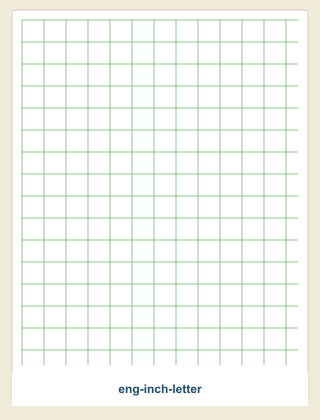
0.2 inch squares (5 per inch) with a heavy major line every inch on US Letter — the classic American engineering pad ruling.
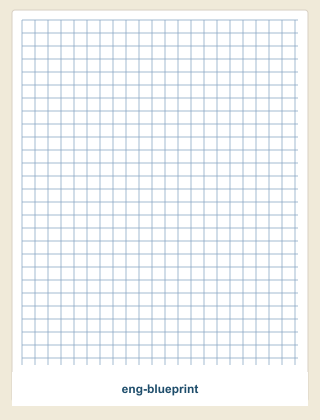
Blue-line engineering grid on A4 evoking classic blueprint paper. 2mm minor grid with 10mm major lines for technical drawing.
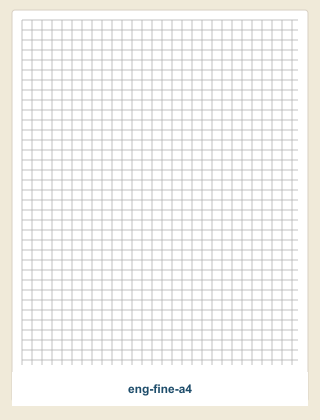
Ultra-fine 1mm minor grid with 5mm major lines on A4. For precision drawings and detailed technical work.
Engineering graph paper —often just called engineering paper — is a grid with a deliberate hierarchy: fine, low-contrast minor lines subdivided under heavier major lines, classically five squares per major. That structure is what separates it from ordinary graph paper. The major lines give you fast landmarks for counting cells and scaling axes, while the faint minor grid keeps handwriting, decimal points, and sketch proportions aligned without visually competing with your work. Add the traditional soft green ink —chosen because it is easy on the eyes and fades back on photocopies —and you have the engineering paper that generations of engineers have solved problems on.
Many engineering courses require homework on engineering paper in a fixed format: state what is given, state what you must find, then work the solution one step per line with units carried through and the final answer boxed. The engineering graph paper grid is what makes this discipline practical — the major lines block out sections, and the minor grid keeps equations, unit conversions, and free-body diagrams neatly aligned down the page.
Work in a single column and resist cramming two problems side by side —graders read down, not across. If a problem runs long, start the next sheet of engineering paper rather than shrinking your writing; a 100-page PDF from the generator above costs nothing to reprint.
5 squares per inch (0.2 inch squares) is the classic American ruling —pick the 0.2 inch spacing to match the engineering paper pads sold in every campus bookstore. Metric engineering paper uses a 2 mm minor grid with a heavy line every 10 mm. The 0.1 inch and 1 mm options suit fine detail work, and 5 mm gives a large, easy-reading grid. You can also switch the sub-divisions —4, 5, or 10 minor squares per major —and the line weight, from ultra-fine to regular.
Engineering green is the default, but the same engineering graph paper prints in gray for photocopy-friendly masters, sepia for a vintage drafting look, or blueprint blue. Every sheet exports as a vector PDF in six paper sizes — engineering graph paper A4 for metric courses, Letter for US classes, up to A3 and Tabloid for large schematics — with an optional multi-page PDF of up to 100 identical sheets.
Engineering students burn through engineering paper faster than any other group —statics, thermodynamics, circuits. Print a semester's stack in one multi-page PDF instead of buying pad after pad.
Engineering paper’s major-minor hierarchy makes quick tables and hand-plotted test curves legible. A gray grid photocopies cleanly when lab records need to be duplicated or scanned.
Component symbols snap to the minor grid and wire runs follow the majors, so a hand-drawn schematic on engineering graph paper stays readable. The 0.1 inch ruling echoes classic breadboard pitch.
Major lines at fixed intervals make engineering paper a quick scale-drawing tool with no ruler needed —one major square equals one meter, one foot, whatever the sketch needs. Sepia or blue lines give drafts a classic look.
Standard graph paper rules every line at the same weight; engineering paper adds a second, heavier weight on a fixed interval. That one change is why engineering graph paper and standard grids are not interchangeable for technical work —and if you need numbered axes rather than a plain grid, use coordinate plane graph paper instead; for exponential data, reach for semi-log graph paper.
| Engineering graph paper | Standard graph paper | |
|---|---|---|
| Line structure | Fine minor grid + heavy majors (4/5/10 per major) | One uniform line weight |
| Counting cells | Fast —majors act as landmarks | Slow —count square by square |
| Classic color | Soft green (low glare, faint on copies) | Blue or gray |
| Best for | Calculations, coursework, schematics, scale sketches | General plotting, math practice, everyday grids |
The engineering computation pads from Ampad, TOPS, or Roaring Spring are a specific product: green-tinted stock, three-hole punched, with the grid printed on the back of each sheet so it shows through faintly and never competes with your pencil work. If your course explicitly requires that pad, buy the pad — that physical product is what most searches for engineering computation paper mean.
Printing engineering graph paper yourself costs nothing and unlocks what pads cannot do: any ruling from 1 mm to 0.2 inch, four line colors, A4 and A3 formats pads rarely come in, and a fresh stack whenever you run out at 2 a.m. before a deadline. To mimic the subtle back-printed look, pick the ultra-fine line weight with the gray or green grid —and a three-hole punch turns any stack of engineering paper into binder filler.
Engineering graph paper is a grid with two line weights: a fine minor grid subdivided under heavier major lines, classically five squares per major. The hierarchy lets you count cells at a glance and keep decimal calculations aligned, which is why it is the standard sheet for engineering coursework, technical calculations, and schematic sketches. The traditional line color is a soft green.
Each small square is 0.2 × 0.2 inches, so five of them fit in one inch, with a heavier major line every inch. This is the classic American engineering paper ruling. To generate it, choose the 0.2 inch minor spacing with 5 sub-divisions per major.
Two practical reasons: the soft green tone reduces glare and eye strain during long calculation sessions, and green lines reproduce faintly on photocopies and scans, so your pencil work stands out while the grid fades back. This generator draws classic engineering-green lines on white paper, or you can switch to gray, sepia, or blueprint blue.
Not identical, and it is worth knowing the difference. Commercial computation pads (Ampad, TOPS, Roaring Spring) use green-tinted stock, print the grid on the back of each sheet so it shows through faintly, and come three-hole punched. This generator prints the grid directly on the front of plain paper. For a similarly subtle grid, choose the ultra-fine line weight with a light color —and punch the sheets yourself if you keep a binder.
In the print dialog choose “Actual Size” or “100% scale” rather than “Fit to Page.” That keeps a 0.2 inch square exactly 0.2 inches on paper. The PDF is vector, so lines stay crisp at any print resolution.
Yes. The generator exports a vector PDF in six paper sizes — Letter, A4, A5, Legal, Tabloid, and A3 — in portrait or landscape. You can also generate a multi-page PDF with up to 100 identical sheets for a semester’s worth of homework paper.